Principle of osteopathy
1. The unity of the being.
The body is a biological unit that interacts with its environment. For Still, an affected part of the body signifies an imbalance in the harmony of the whole body. Osteopathy must therefore restore not only the function of the affected part, but also the balance of the body as a whole.
2. Self-healing
Principle of osteopathy
The body has a natural tendency to defend and regulate itself. The body has a natural tendency to return to balance. It must therefore have within it the means to regain this balance, supported by a suitable environment and appropriate nutrition. Rather than attacking the underlying ailment, treatment must reactivate the body's defence functions. Still already sensed the role of immunity long before it was demonstrated.
Principle of osteopathy
3. Structure governs function and vice versa
The term structure applies to bones, muscles, ligaments, tendons, supporting tissues, organs and even cells. Any living element of the body that has a form, and therefore a framework, is a structure. The role of a structure corresponds to its function, which can notably be explained by physiology.
The structure of the striated muscle cell, for example, is related to its function, which is essentially movement, but through its contraction it also contributes to maintaining the homeostasis of body temperature by converting its chemical potential energy into mechanical work, which produces a great deal of heat.
4. The rule of the artery
Principle of osteopathy
"The rule of the artery is supreme @" said Still. Still believed that the blood was capable of generating the substances needed to maintain natural immunity against disease. For Dr Still, the integrity of the circulatory systems (blood and lymph) as well as of the nervous system was an indispensable condition for good health.
Principle of osteopathy
5. The locomotor system
The neuro-musculo-skeletal system is more than a framework: it allows movement, and therefore life. The slightest dysfunction can have an effect on the physiology of the whole body.
Everything we do is expressed through our "neuro-musculo-skeletal" system. The other systems are responsible for nourishing and serving this system to enable us to adapt to our environment and to live normally.
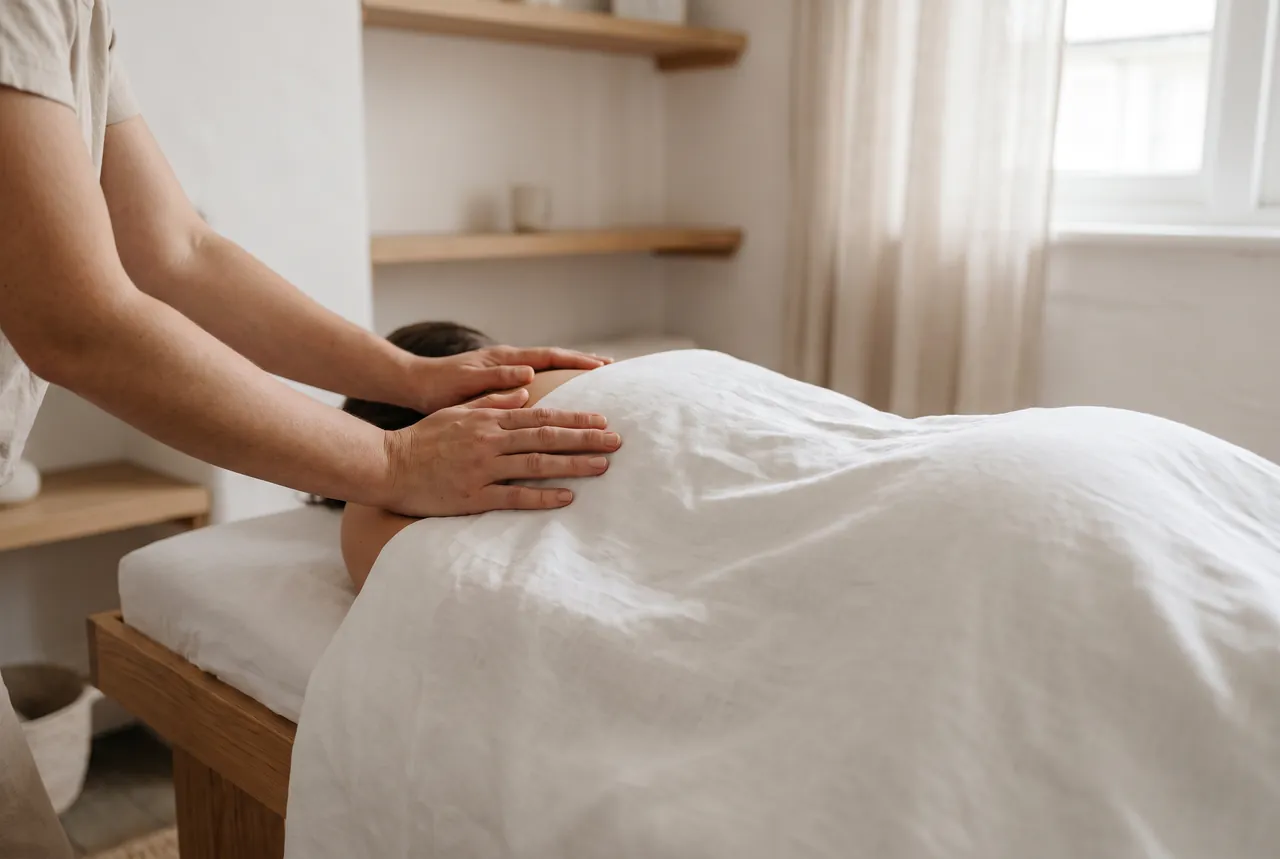
Osteopathy is therefore a diagnostic and therapeutic system based on the quality of movement in the body, whose treatment is exclusively manual, considering the individual as a whole integrated into their environment.
It treats, on the one hand, certain acute or chronic conditions of the neuro-musculo-skeletal system, but also the states of the individual that lie between the normal and the pathological, which we will call "subnormal" states. In this respect it therefore aligns with the concepts of so-called functional medicine, of Claude Bernard's medicine of the terrain, and of preventive medicine.
Discover